Booking choice: The street food walk, from $81 per person. Check dates Tour details
Most visitors give Amman a day on the way to Petra or the Dead Sea, and that is enough to see the sights that matter. The trick is the order. The city is built on steep hills, and the main sights sit at the top and bottom of one of them. Start high, walk down, eat, and use a car for every climb.
Opening times and fees below are from the Jordan Tourism Board and the Jordan Pass; the food stops are long-standing downtown institutions. We have kept restaurant prices out, because they change faster than this page.
The quick answer
Citadel at 8am, the east steps down to the Roman Theatre, then the souks and the Grand Husseini Mosque downtown. Lunch on falafel and hummus at Hashem and kunafa at Habibah. In the afternoon, ride up to Jabal al-Weibdeh or Rainbow Street for galleries, coffee and the sunset. One day covers the core; two lets you add Jerash or The Jordan Museum.
Can you see Amman in one day?
Yes, the main sights fit into one well-ordered day: the Citadel, the Roman Theatre, downtown's souks and food, and an evening in Jabal Amman or Weibdeh.
Here is the plan this guide follows. Times are a guide, not a timetable; in winter, swap the afternoon around so you reach the Citadel before it closes at roughly 4pm.
| Time | Where | What |
|---|---|---|
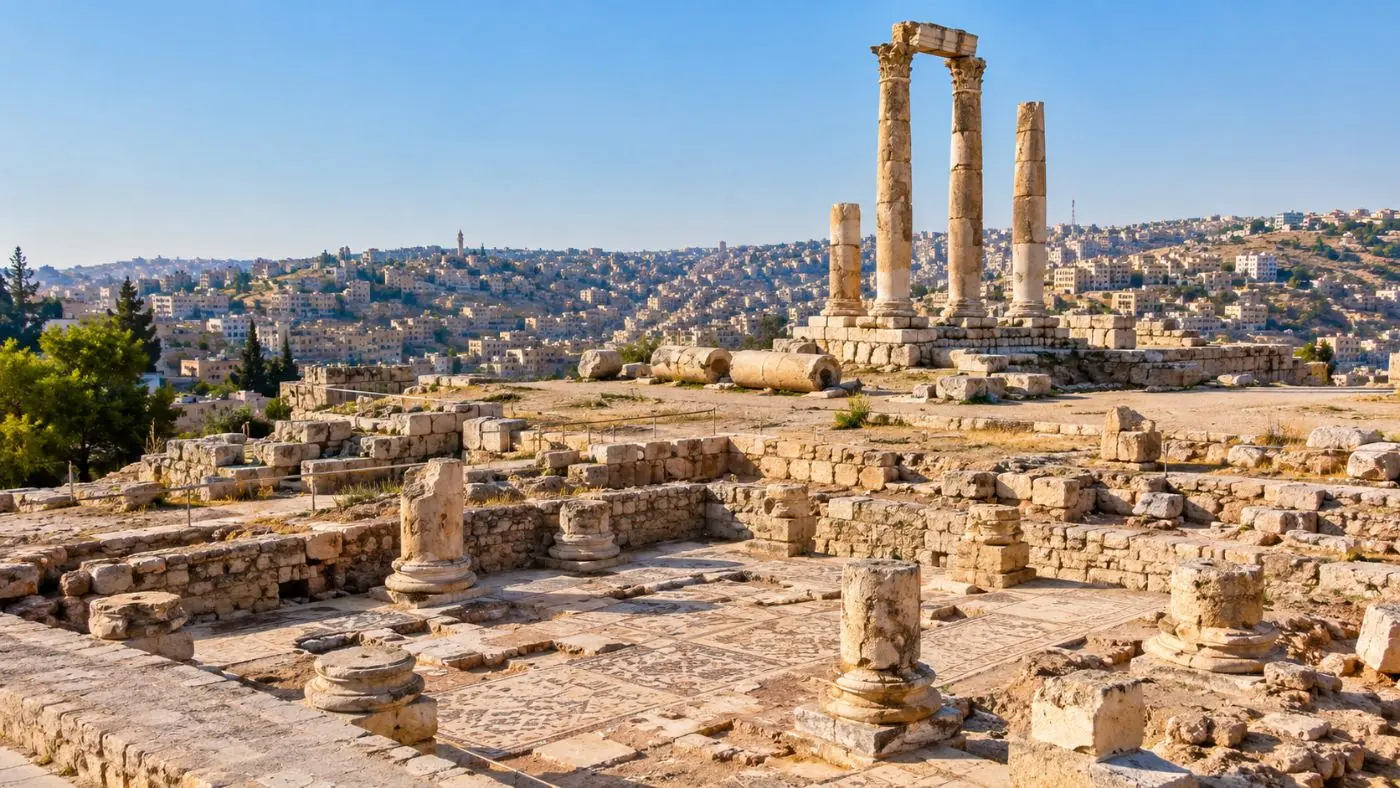
| 8:00 | Amman Citadel | Temple of Hercules, museum, Umayyad palace (1.5 to 2 h) |
| 10:00 | East steps to Hashemi St | Walk down past the viewpoint |
| 10:15 | Roman Theatre and Odeon | The theatre, its two small museums, the Odeon next door |
| 11:30 | Downtown souks | Grand Husseini Mosque, the gold souk, spice stalls |
| 13:00 | Hashem, then Habibah | Falafel, hummus and foul; kunafa for dessert |
| 15:00 | Jabal al-Weibdeh or Rainbow Street | Galleries, old villas, coffee, souvenirs |
| 17:30 | Rainbow Street or a rooftop | Sunset over the Citadel hill, then dinner |
Two shortcuts if time is tight: skip the museums at the Roman Theatre, and take a car from downtown to Rainbow Street instead of walking the hill.
Why start the day at the Citadel?
It opens at 8am, it is coolest and quietest then, and from the top you can walk downhill to everything else.
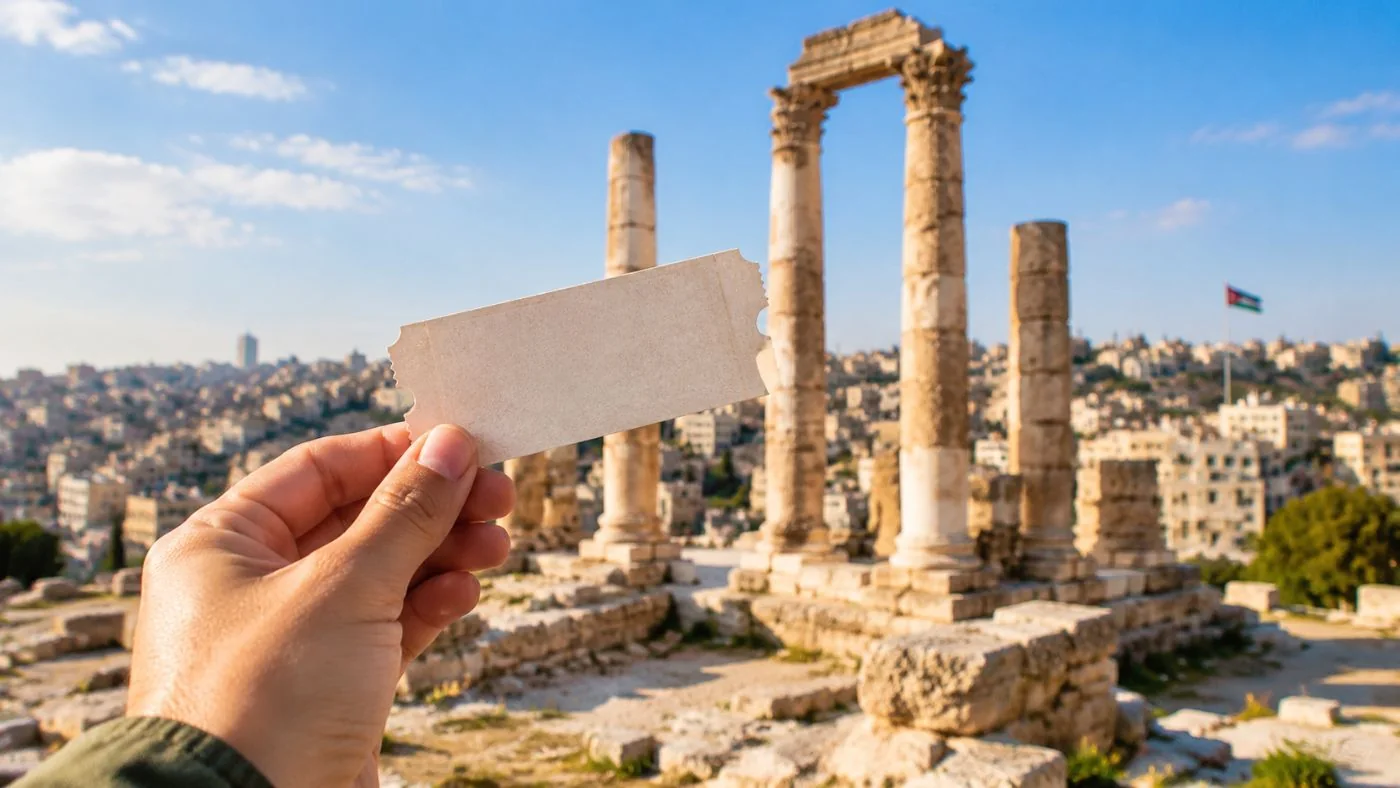
Take a car to the gate on King Ali Bin Al-Hussein Street. Entry is 3 JD, or free with the Jordan Pass, and the hill takes 1.5 to 2 hours with the museum. Stand at the south rim first: the Roman Theatre is directly below, and you can trace the rest of your morning from up there.
Our monument-by-monument guide has the route, and the tickets guide covers the seasonal hours. When you are done, leave by the steps on the east side. They drop past a viewpoint to Hashemi Street, opposite the theatre.
Start with the history: a short guided walk on the Citadel with someone who knows it.
Check dates for the guided Citadel walkWhat is there to see at the Roman Theatre and around it?
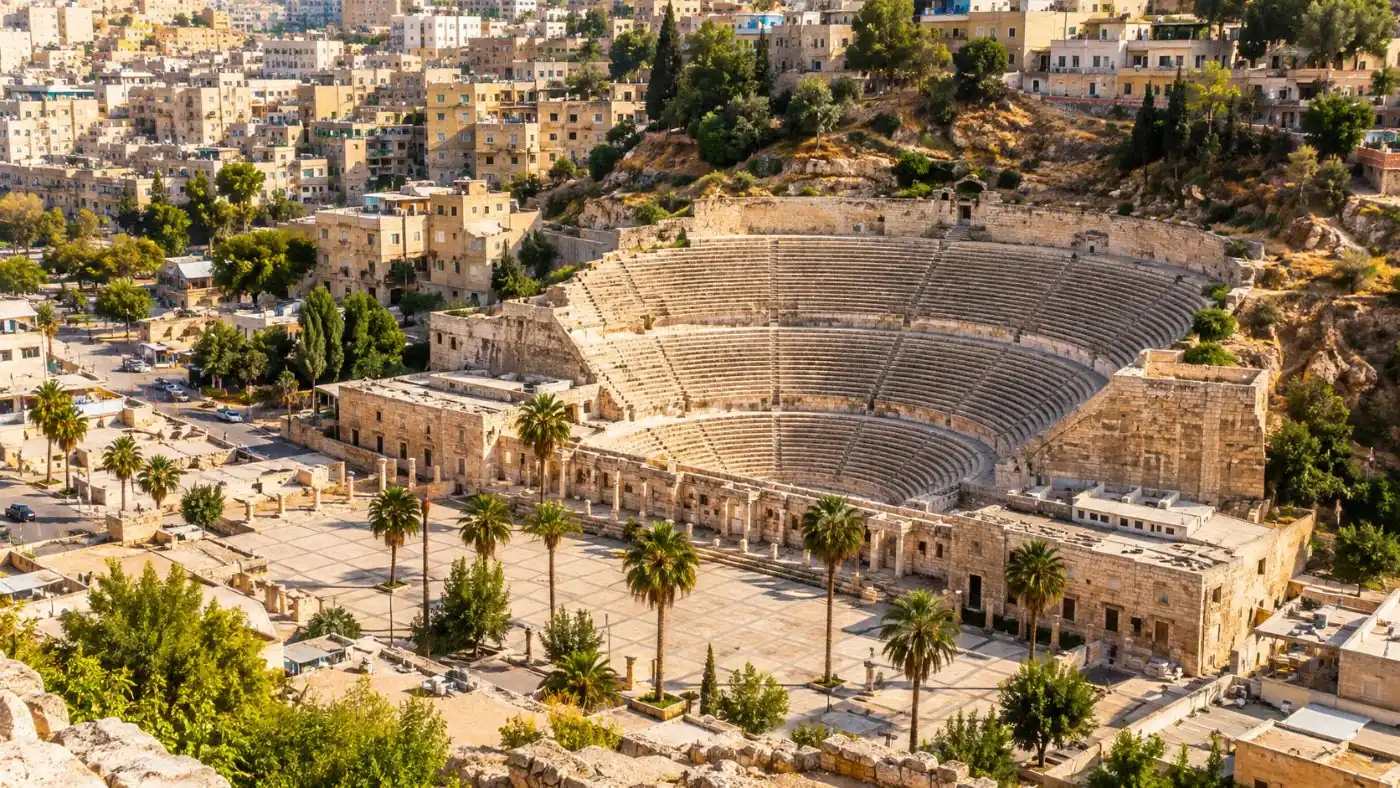
The 6,000-seat Roman Theatre (2 JD, with two folklore museums), the small Odeon beside it and, a short walk west, the Nymphaeum fountain house.
The theatre was built in the 2nd century AD under Antoninus Pius and faces north, so the sun stays behind the audience for most of the day. Climb to the top tier: the view back up to the Citadel is the reverse of the one you just had, and the acoustics are good enough to test from the stage. The 2 JD ticket includes the Museum of Popular Traditions and the Folklore Museum built into its basements.
The Odeon next door, about 400 seats according to the DoA, was a covered concert hall. The square in front, the Hashemite Plaza, is where locals sit in the evening. Walk west along Hashemi Street and the Nymphaeum, a 2nd-century public fountain with a 65 m façade, sits about 600 m away, on the way to the souks.
Where should you eat in downtown Amman?
Hashem for falafel, hummus and foul, open 24 hours; Habibah for kunafa, in its alley since 1951. On Rainbow Street, Al Quds Falafel has been frying since 1966.
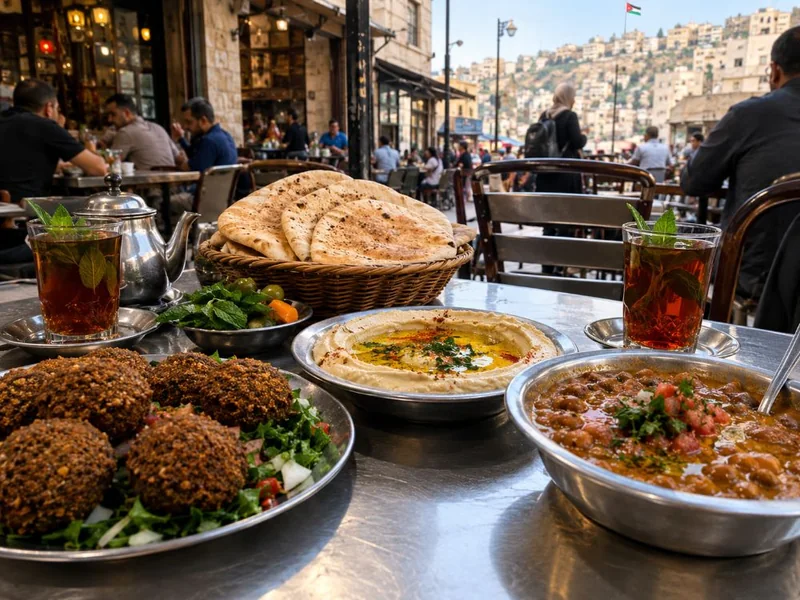
Hashem is on Al-Amir Mohammed Street and is open around the clock. There is no menu to speak of: plates of hummus, foul (stewed fava beans) and falafel arrive with bread, onions and mint, and you eat at shared tables in the alley. Go for breakfast or lunch. It is busy, quick and the most Amman meal you can have.
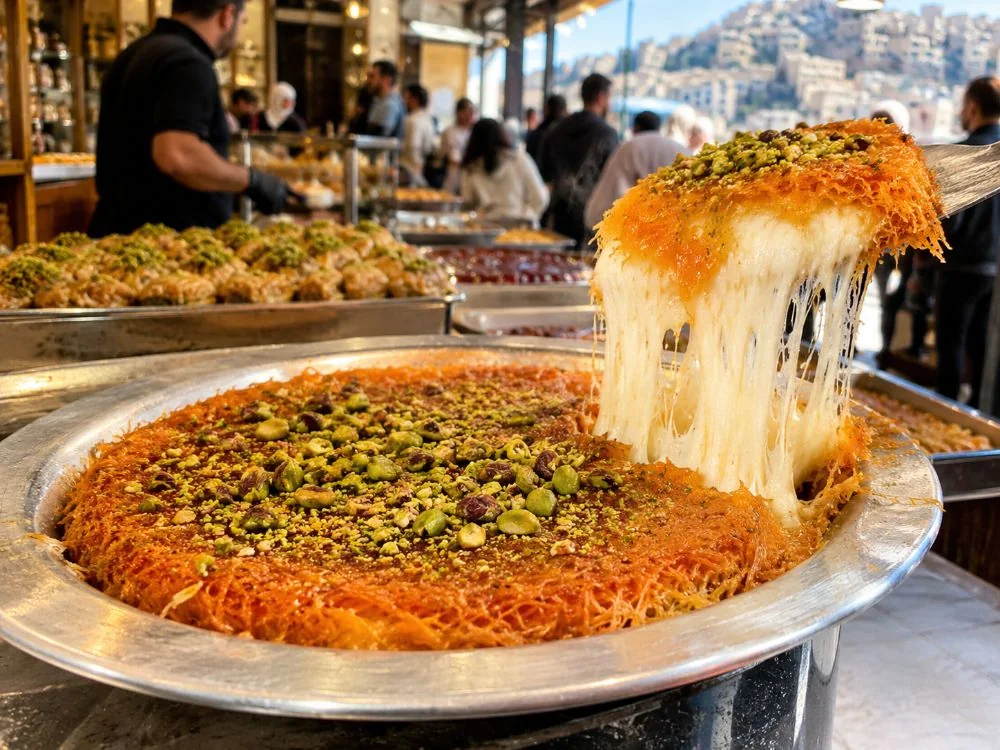
Habibah has sold kunafa from its original stall since 1951, in the downtown alley now named after the founder, Mahmoud Habibah, near the Arab Bank (Jordan News). Kunafa is warm white cheese under a crust of semolina or shredded pastry, soaked in syrup. You queue, pay, take your plate and eat it standing in the lane.
If you are in Jabal Amman later, Al Quds Falafel on Rainbow Street is a walk-up counter with a two-item menu that has been running since 1966.
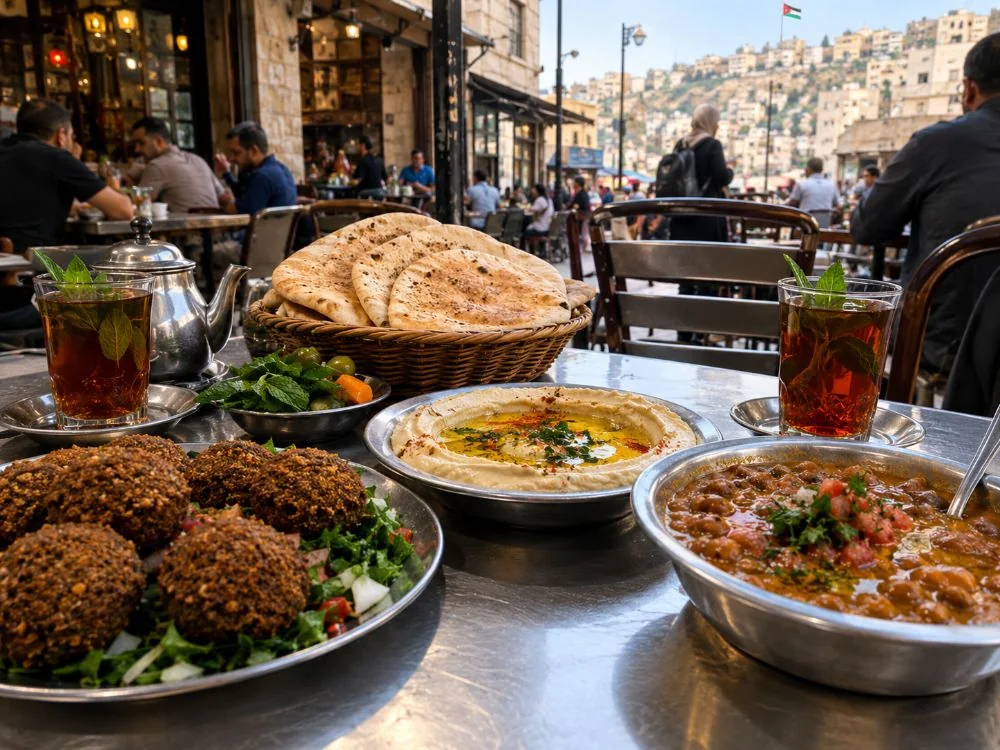
Eat your way through downtown with a local: the souks, the old streets and the snacks between them.
Explore the street food walk Tour detailsWhat is there to do in downtown Amman after lunch?
Walk the souks around King Faisal Street and the Grand Husseini Mosque, browse the gold souk and the spice stalls, and see the King Abdullah I Mosque later if you have a car.
Downtown, al-Balad, lies in the valley between Jabal Amman and Jabal al-Weibdeh. Its centre is the Grand Husseini Mosque, rebuilt from 1924 by Emir Abdullah on the site of a 7th-century mosque and restored after a fire in 2019. Around it run the souks: the gold souk off King Faisal Street, stalls of spices, nuts, coffee and dried fruit, and alleys of cheap clothes and household goods.
The King Abdullah I Mosque in Abdali, with its blue mosaic dome, is the one large mosque in Amman that regularly welcomes non-Muslim visitors. Women cover hair, arms and legs, men wear long trousers, and robes can be borrowed at the door. Lonely Planet gave the fee as JD2 in 2019, including a small museum, and it closes to visitors at prayer times. It is a short ride from downtown.
For shopping, downtown sells spices, coffee with cardamom and olive oil soap. Bargain in the souks; it is expected.
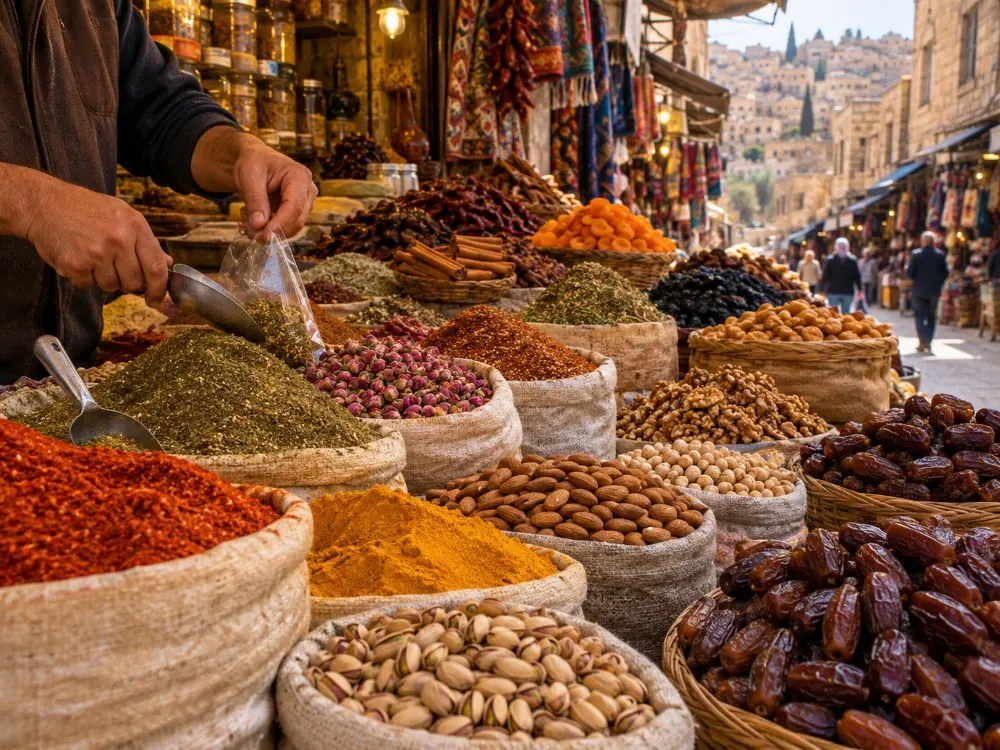
See downtown with a local who knows which alley sells what: a walking tour with street food.
Check dates for the street food walkJabal al-Weibdeh or Rainbow Street for the afternoon?
Weibdeh for galleries, old villas and quiet cafés; Rainbow Street for shops, views and a livelier evening. Both are a short ride from downtown.
Jabal al-Weibdeh is the hill just north of Jabal Amman, overlooking downtown, with stone villas from the early 20th century, bougainvillea and small cafés. Its anchor is Darat al Funun, an arts centre spread over three 1920s houses, with the ruins of a 6th-century Byzantine church in its garden. Its events are free.
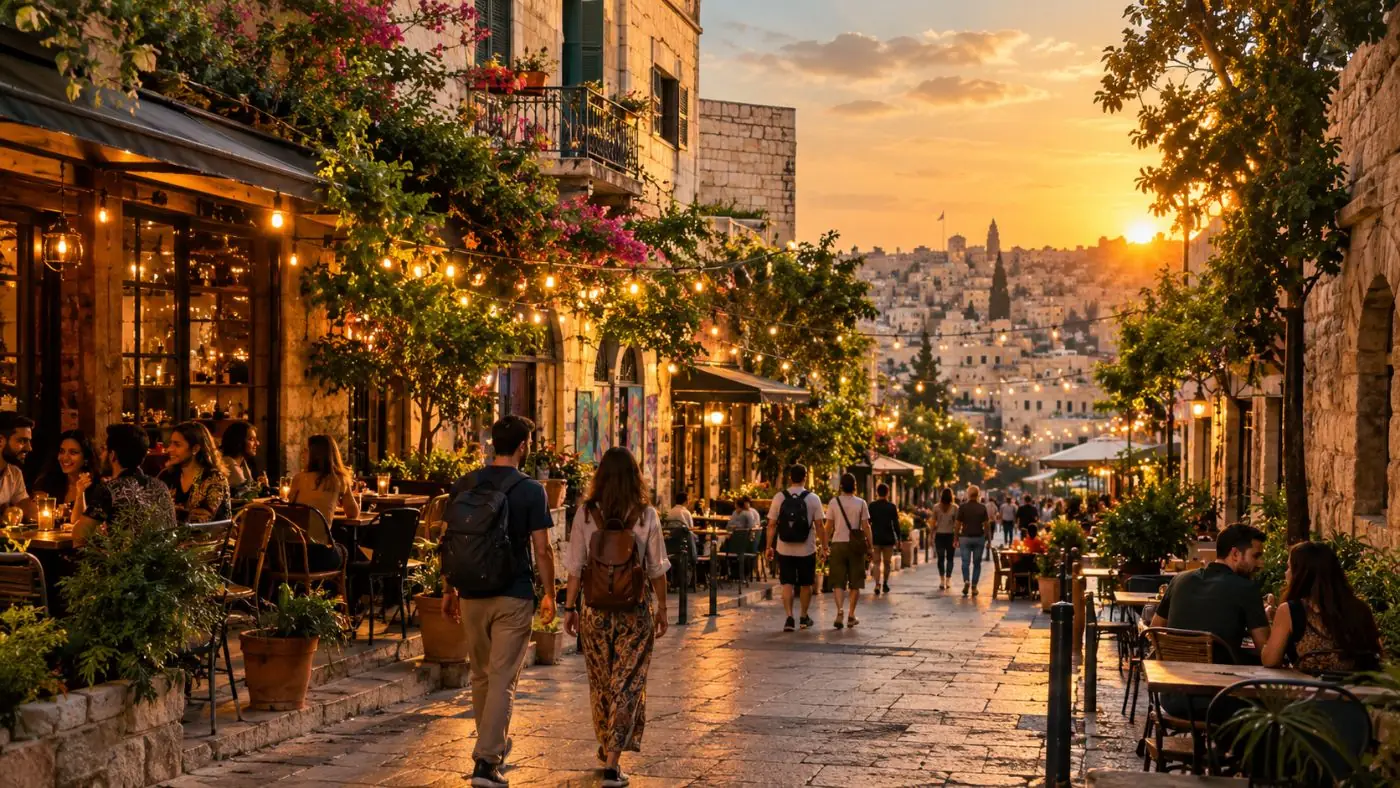
Rainbow Street, on Jabal Amman, is named after the old Rainbow Cinema. It is nearly flat, which makes it one of the few easy walks in the city. The Wild Jordan Center, on Othman Bin Affan Street across from the stairs at the end of Fawzi al-Malouf Street, sells crafts from Jordan's nature reserves and has a terrace looking across to the Temple of Hercules. On summer Fridays, Souk Jara fills Fawzi al-Malouf Street with craft stalls from 10am to 10pm; its season runs roughly May or June to September.
Whichever you pick, stay for the sunset. The light catches the Citadel columns across the valley, and the evening call to prayer echoes between the hills.
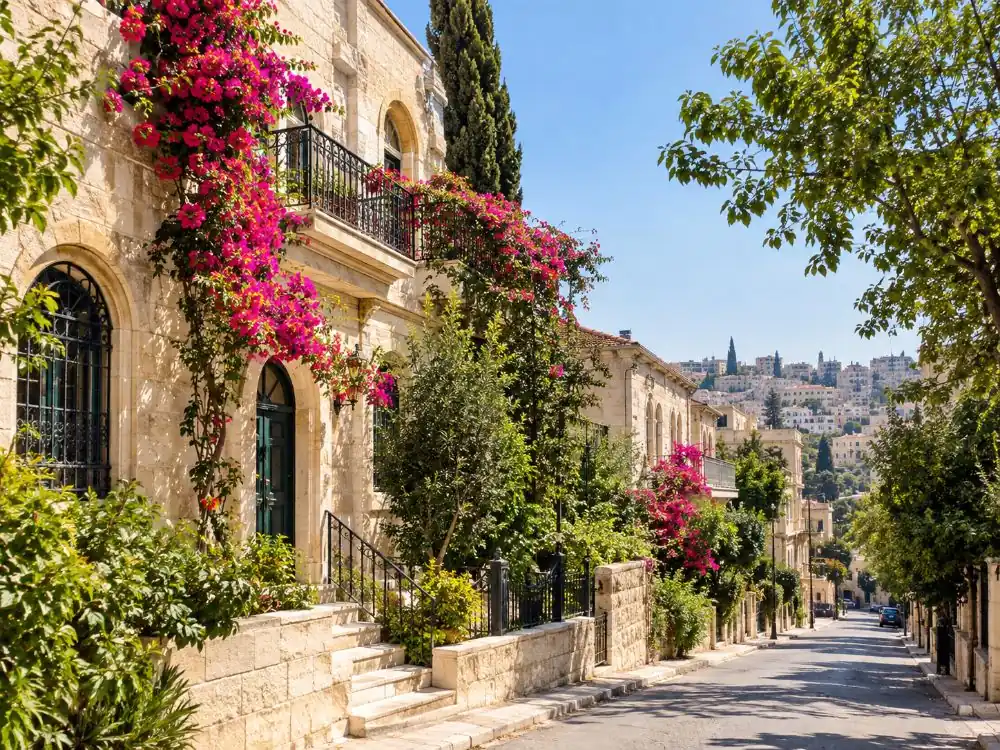
Is Amman walkable?
In parts. Downtown, Rainbow Street and Weibdeh are good on foot, but the city spreads over about 19 hills, so plan to walk downhill and ride up.
Amman was founded on seven hills and now covers more than 19, between about 700 and 1,100 m above sea level (Wikipedia). Between the hills, long stairways cut through the neighbourhoods; going down them is a pleasure, going up them after lunch is not. Pavements outside the centre can be patchy.
For the climbs, use Uber or Careem, which the UK FCDO recommends over yellow taxis, or a metered yellow cab with cash. Most rides across the centre cost very little. In crowded downtown streets, keep your phone and wallet in a front pocket: pickpocketing and bag-snatching are the crimes the FCDO mentions.
How many days do you need in Amman?
One day for the city's core, two to add The Jordan Museum or a day trip to Jerash, three if you also want the Dead Sea or Madaba.
- One day: this itinerary. You see the Citadel, the Roman Theatre, downtown and one neighbourhood.
- Two days: add The Jordan Museum in Ras al-Ain for the 'Ain Ghazal statues and the Dead Sea Scrolls (closed Tuesdays), or a day trip to Jerash, about an hour north. The Amman and Jerash day combines the Citadel with Jerash if you only have one day.
- Three days: add the Dead Sea or Madaba's mosaics and Mount Nebo. Coming from a Dead Sea hotel, the private Jerash and Amman day from the Dead Sea picks you up there.
For the rest of Jordan, from Petra to visas, read our Jordan travel guide.
Only one day in Amman? See the Citadel and Jerash's Roman streets in a single trip.
Check dates for the Amman and Jerash day tripFrequently asked questions
What is Amman famous for?
The Citadel and its Temple of Hercules, the Roman Theatre, the downtown souks, and food: falafel, hummus, mansaf and kunafa. It is also the gateway to Petra, Jerash and the Dead Sea.
Is Friday a good day to visit Amman?
Friday is the Muslim day of prayer and the start of the Jordanian weekend. Many downtown shops open late, and around midday prayers the area near the Grand Husseini Mosque is busy. The Citadel may open later on Fridays.
Is a food tour worth it in Amman?
If you want to try more than falafel and kunafa, yes. A local guide takes you to small counters you would walk past, and explains what you are eating.
What should I buy in Amman?
Spices, cardamom coffee and olive oil soap from the downtown souks, and crafts from the Wild Jordan Center's Nature Shop near Rainbow Street.
Ready to book
Choose your tour
Free cancellation up to 24 hours before on every option. Prices are from-prices in USD and move with the season.
Amman Walking Tour: Culture & Street Food
Amman's most reviewed walk, but it skips the Citadel
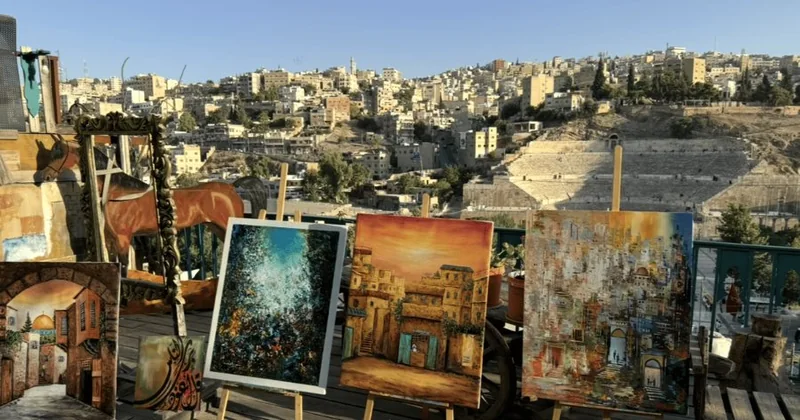
Walking Tour: Citadel, Art Trail & Souks
A guided hour on the hill, then galleries and the souks on foot
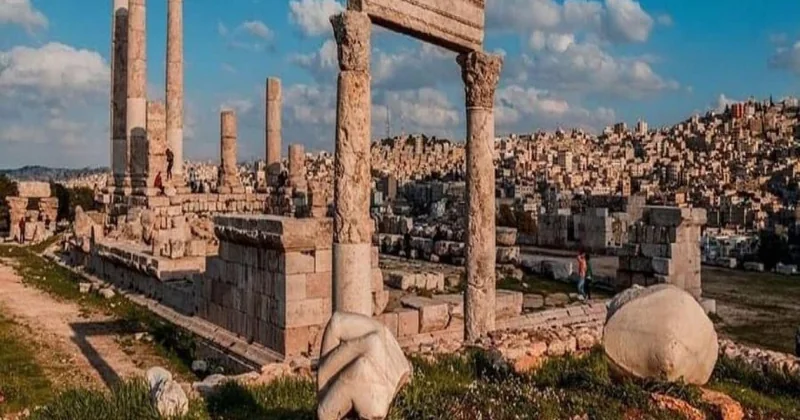
Amman City & Jerash Private Day Trip
- Private air-conditioned car with an English-speaking driver
- Hotel pickup and drop-off in Amman
- About 1 hour at the Citadel and 2 hours in Jerash