Booking choice: The guided Citadel walk, from $47 per person. Check dates Tour details
The Citadel looks like a scatter of ruins from the road, and plenty of visitors take a photo of the two big columns and leave. That misses most of the site. Behind the temple there is a museum, a Byzantine church, the foundations of an 8th-century mosque, a domed hall you can walk inside, a colonnaded street and a cistern big enough to swim laps in.
The route below follows the signposted path from the entrance to the northern end of the hill, then back down the eastern steps toward the Roman Theatre. Dates and dimensions come from the Department of Antiquities, the American Center of Research (ACOR), which restored the temple, and the Spanish-Jordanian work on the palace.
The quick answer
Walk it south to north: the Temple of Hercules and the giant marble hand, the Ayyubid watchtower on the south wall, the Jordan Archaeological Museum, the Byzantine church, the Umayyad mosque, the domed entrance hall of the palace, the colonnaded street, the big round cistern and the governor's quarters at the far end. Allow 1.5 to 2 hours with the museum.
What is there to see at the Amman Citadel?
Nine main stops spanning a thousand years of building: a Roman temple, a medieval tower, a museum, a Byzantine church and an Umayyad palace complex with its mosque, street, cistern and residences.
Here is the whole hill at a glance, in walking order. The dates are those given by the DoA, ACOR and the excavators.
| Stop | Period | Date | Look for |
|---|---|---|---|
| Walls and viewpoint | Bronze Age to Umayyad | Rebuilt many times | The view straight down onto the Roman Theatre |
| Temple of Hercules | Roman | AD 161-166 | Columns 13.5 m tall, the marble hand |
| Ayyubid watchtower | Ayyubid | c. 1200-1220 | Temple column drums built into its wall |
| Jordan Archaeological Museum | Modern | Early 1950s | The 'Ain Ghazal statues still on show |
| Byzantine church | Byzantine | 6th century | Reused Corinthian capitals, scraps of mosaic |
| Umayyad mosque | Umayyad | 8th century | Column bases and the mihrab wall |
| Domed entrance hall | Umayyad | c. 720-740s | Stucco niches, the modern timber dome |
| Colonnaded street and residences | Umayyad | c. 720-740s | Arches, doorways, the throne room |
| Umayyad cistern | Umayyad | c. 730 | 17.5 m across, with steps to the floor |
Where does the visit start, and what are the walls?
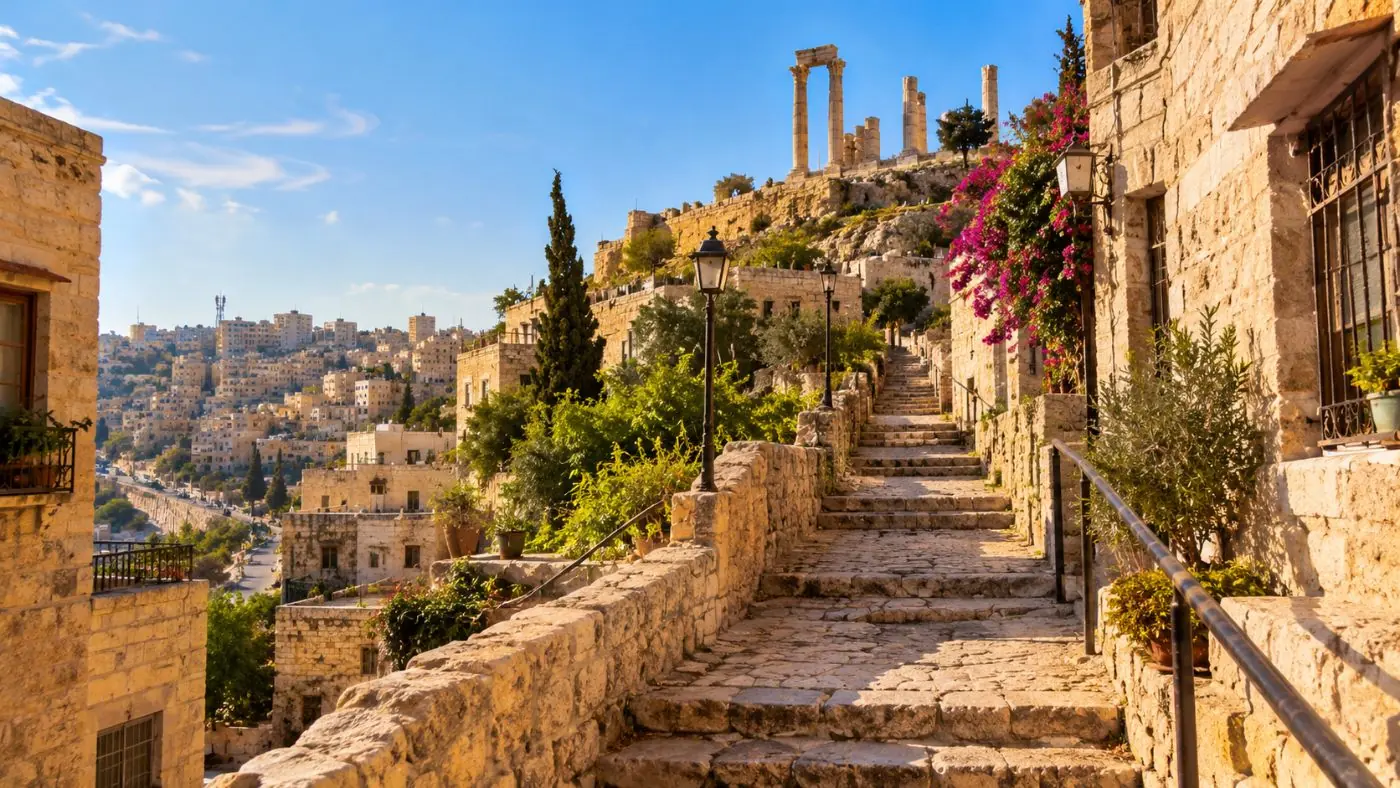
At the main gate on King Ali Bin Al-Hussein Street. The ruined walls around the hill run for about 1,700 m and were rebuilt from the Bronze Age to the Umayyads.
Jabal al-Qal'a is one of Amman's original seven hills, an L-shaped plateau about 850 m above sea level that rises steeply above downtown. The ticket office is on the approach road; the path from the gate brings you out at the southern end of the hill, by the temple.
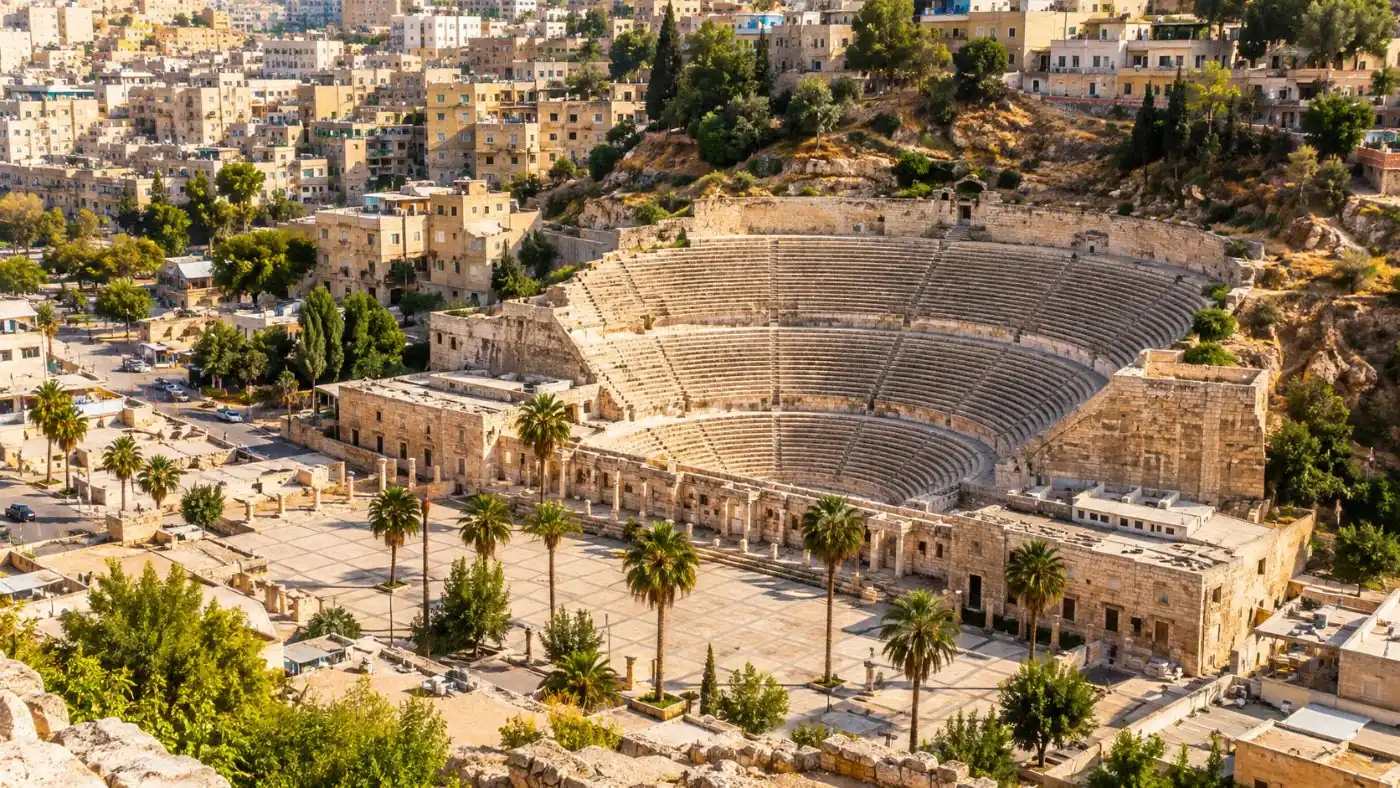
Before you reach the columns, walk to the southern edge of the hill. Below you is the Roman Theatre, cut into the hill opposite, with the old city spread between. It is the classic Amman photo and it needs no ticket for the theatre. The walls themselves are patchy: stretches of big Roman blocks, rough Umayyad patching, and gaps where the city simply took the stone. Lonely Planet puts their total length at about 1,700 m.
What is the Temple of Hercules, and is the giant hand real?
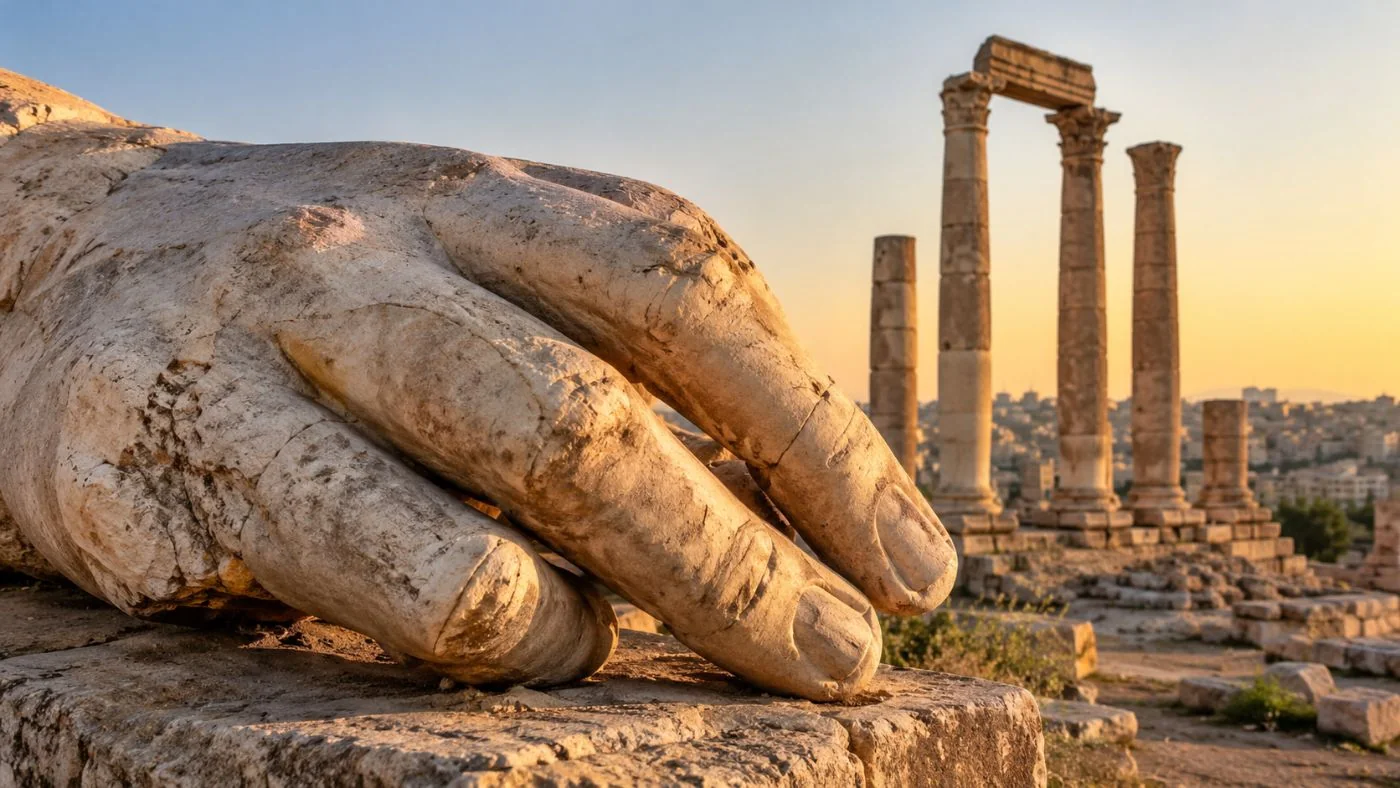
A Roman temple built in AD 161-166, of which a few 13.5 m columns stand again. The marble hand and elbow are real fragments of a statue about 13 m tall.
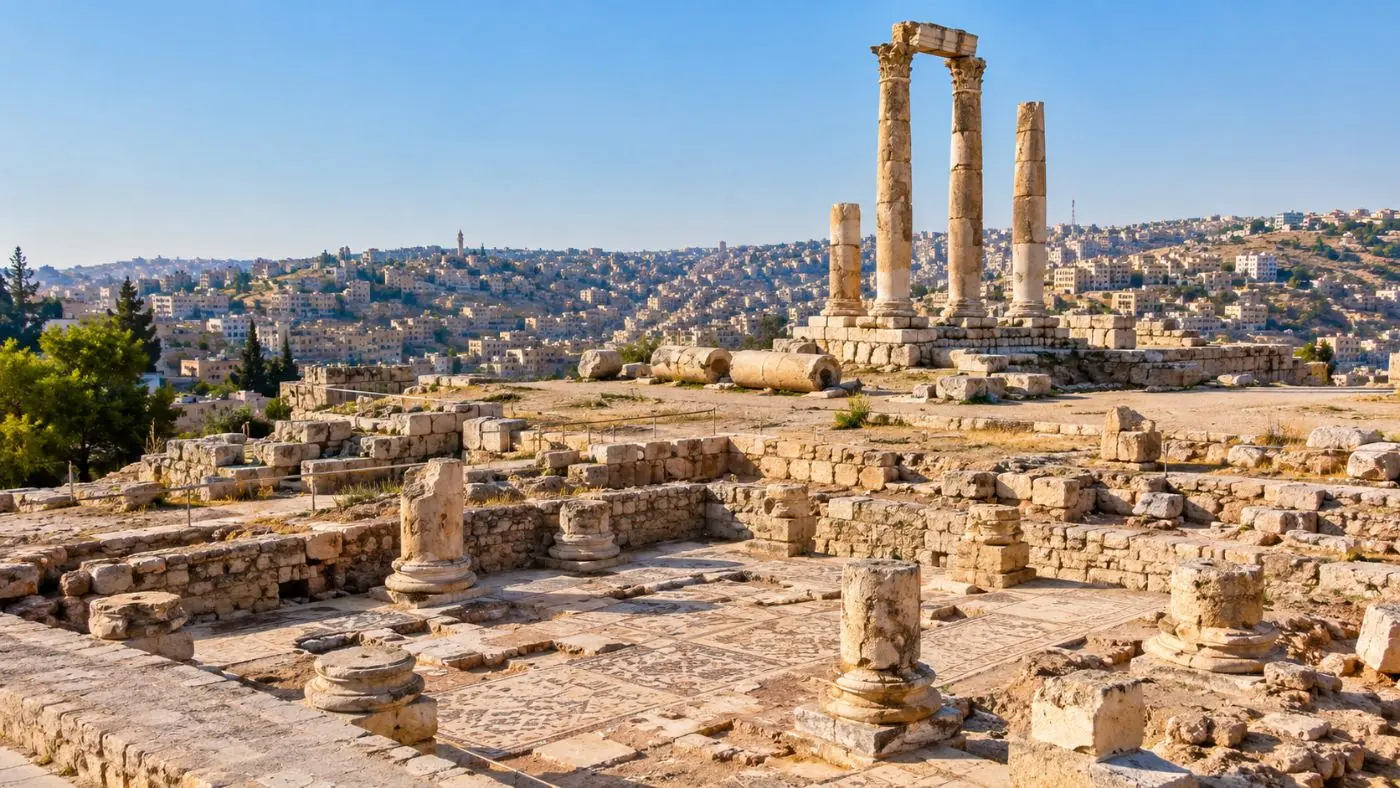
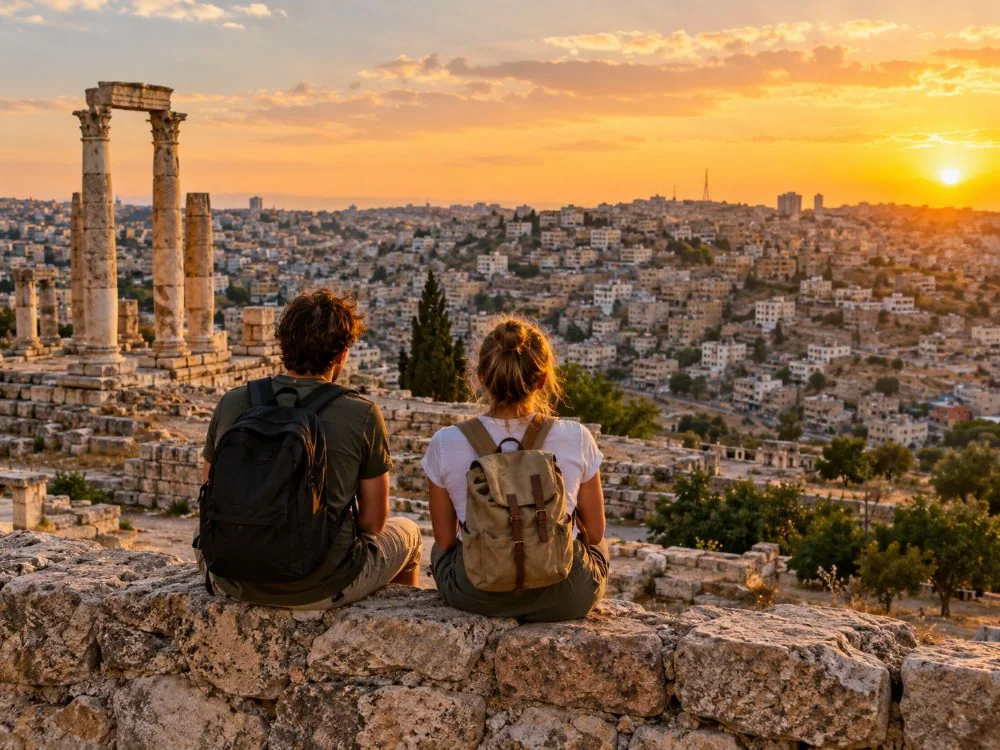
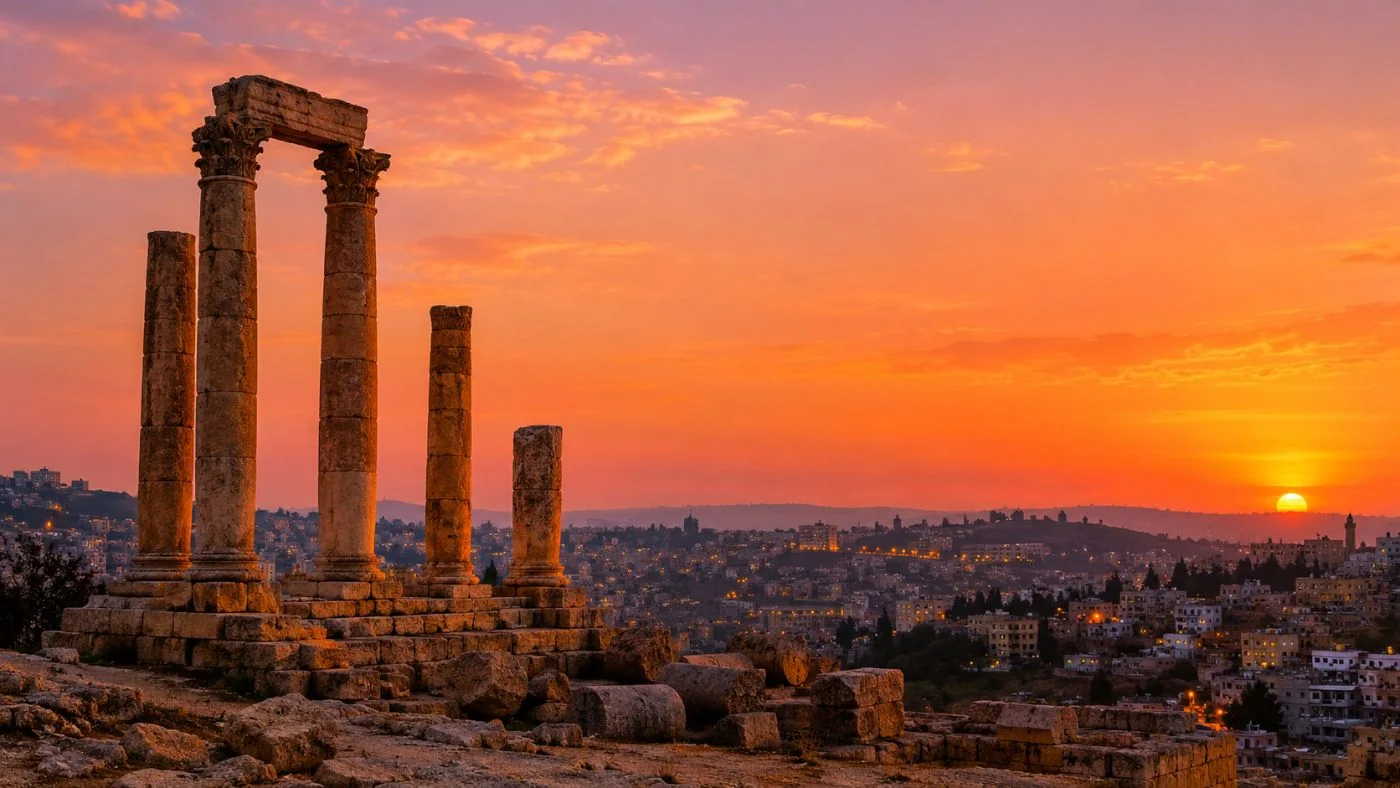
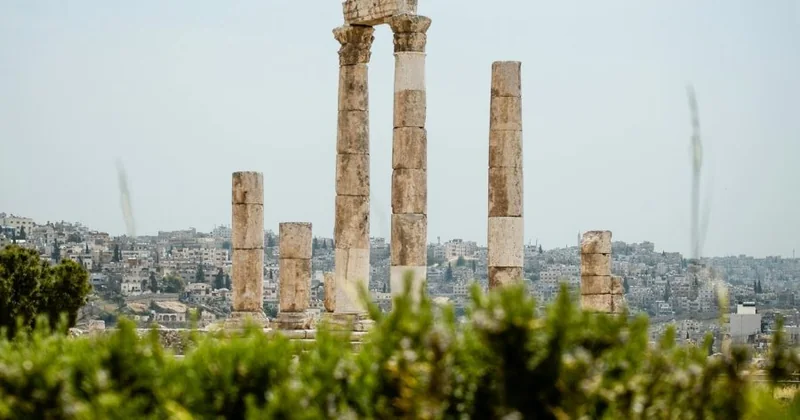
An inscription dates the temple to the governorship of Geminius Marcianus, AD 161 to 166, the first years of Marcus Aurelius's reign. It stood on a podium 43 by 27 m, raised so the whole lower city could see it. The columns fell in the earthquakes of the mid-8th century, and most of the stone had already been carted off for other buildings.
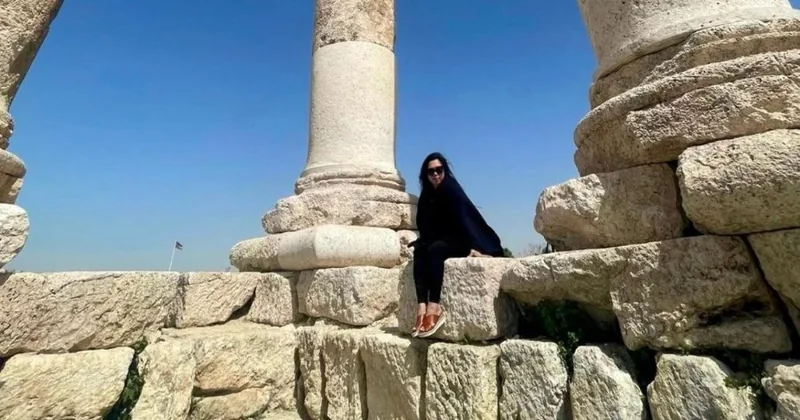
What you see is a 1990s rebuild. ACOR and the Department of Antiquities excavated the site between 1990 and 1993, added new drums and, in 1993, lifted a 16-ton architrave back onto two of the columns. Each column is made of five or six drums weighing up to 11 tons apiece.
The hand lies on the ground near the temple, with an elbow beside it: three fingers and part of the palm, carved in white marble. Scholars estimate the statue stood about 13 m high. It is called Hercules because the temple probably was, but that is an attribution, not a proven fact. The archaeologist who restored the temple, Chrysanthos Kanellopoulos, has argued the statue may have been a female deity. Stand next to the fingers for scale; it is the photo everybody takes, and fair enough.
A local artist guides you from the temple and the palace down to the theatre and the souks.
Check dates for the Citadel and art trail walkWhat is the Ayyubid watchtower?
A small square guard tower on the south wall, built around 1200 to 1220 partly out of the temple's own stones. It is the latest monument on the hill.
By the time the Ayyubids, Saladin's dynasty, built this tower, the Citadel was a lookout post rather than a city. It is a single room with arrow slits, and its southern face reuses drums from the Roman temple next door. It was once thought to be a Crusader building; scholars now date it to the Ayyubid period. ACOR stabilised it in 1996 because part of it was close to collapse.
Most visitors walk straight past. Look at the coursing of the south face, where round column drums sit sideways in the wall. It shows in one glance how every period on this hill quarried the one before.
What is inside the Jordan Archaeological Museum?
A single small hall of finds from the Palaeolithic to the Islamic period, with pottery, glass, coins, inscriptions and a few of the 'Ain Ghazal plaster statues. It takes 20 to 30 minutes.
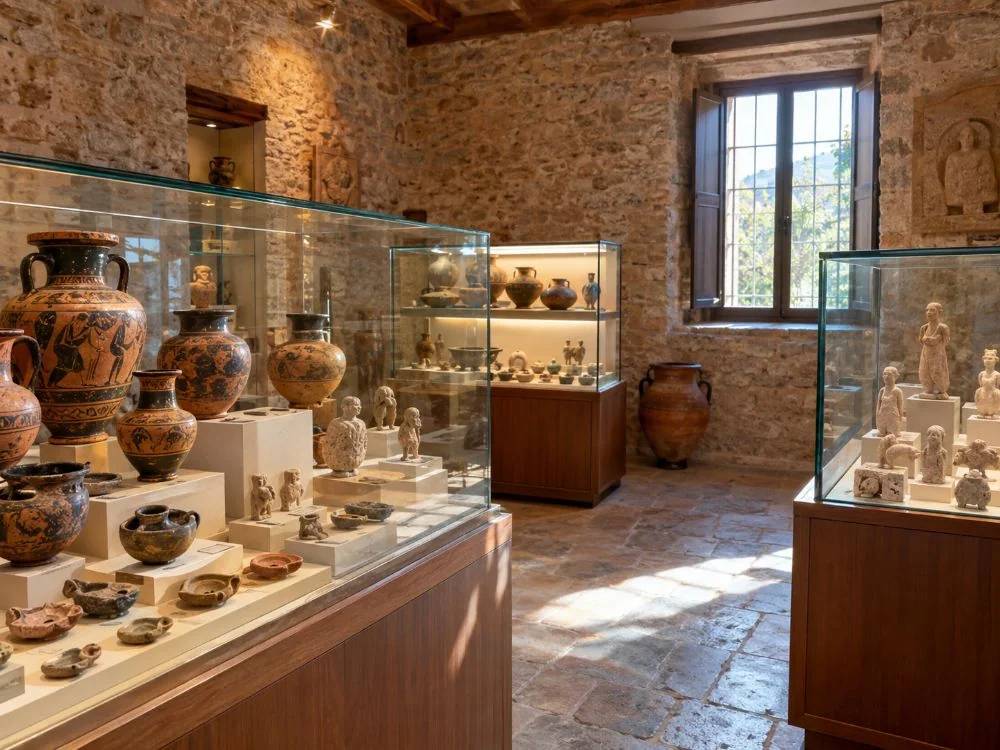
Opened in the early 1950s (usually given as 1951), this was Jordan's first museum, and it shows. Lonely Planet calls it small and rather old-fashioned, which is fair: glass cases, typed labels in English and Arabic, and a strict chronological order around the room. It is also free with your Citadel ticket and gives you the context for everything outside.
The pieces to find are the 'Ain Ghazal statues. Most of these Neolithic plaster figures, made around 7200 to 6250 BC, moved to The Jordan Museum downtown, but some are still here. The official museum page lists them as a highlight. The Dead Sea Scrolls are not here: the Copper Scroll left for The Jordan Museum in 2013.
The Ammonite story is still being dug up. The hill was their capital, Rabbath Ammon, and German and Jordanian excavators working on the Lower Terrace since 2024 have found ivory inlays and double-faced female heads. Our history guide tells that story.
What remains of the Byzantine church and the Umayyad mosque?
The church is a 6th-century basilica with a nave, two aisles and a few mosaic fragments. The mosque is an 8th-century foundation, mostly low walls and column bases, on the highest part of the acropolis.
Follow the signs north from the museum. The church lies to the right of the path: a basilica dated to about AD 550, with columns and Corinthian capitals taken from the Roman temple. The DoA records three churches on the hill in the Byzantine period; this is the one you can read on the ground. Earthquakes flattened most of it, and the mosaic floor of the nave is now largely covered.
A little further on, on the left, are the remains of the Umayyad congregational mosque, the first thing you meet of the palace complex. Look at its orientation. The mosque is turned to face Mecca, while the palace beside it follows the older Roman street grid, so the two sit at a slight angle to each other. It is a small detail, and it tells you that the Umayyads built a new city on top of an old one.
Prefer your own pace? A private driver collects you at your hotel and waits while you explore the hill.
Check dates for the private driver tourWhat is the Umayyad palace and its domed hall?
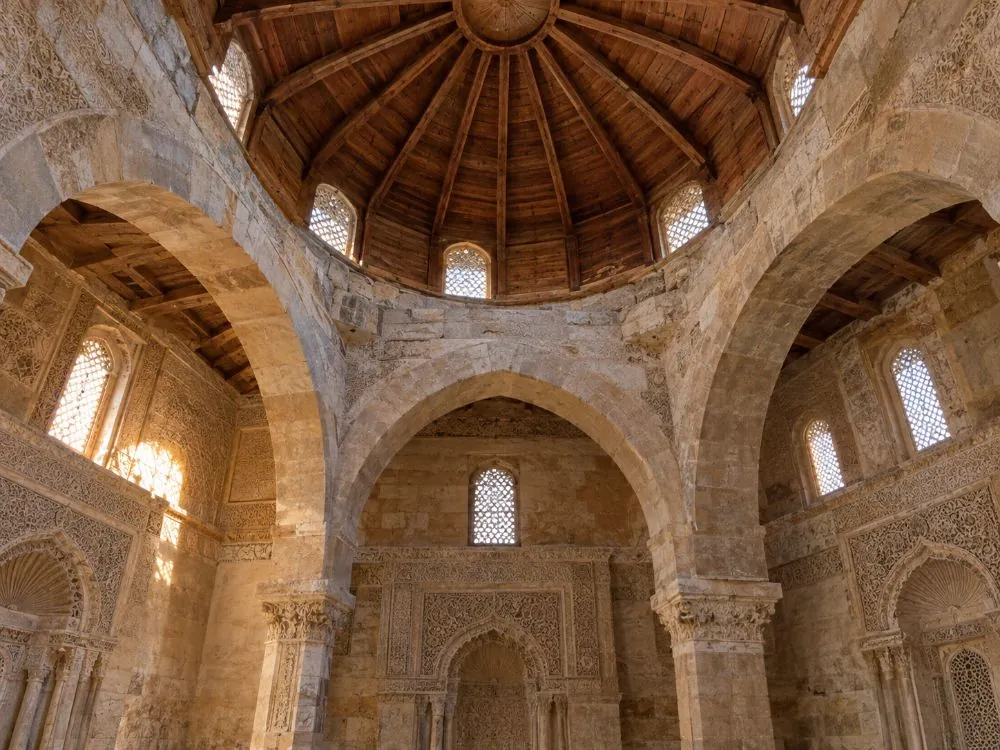
The seat of the Umayyad governor, built in the first half of the 8th century, probably under Caliph Hisham. Its domed entrance hall, about 24 by 26 m, is the most complete building on the site.
The hall is a cross-shaped building that follows the plan of an earlier Byzantine structure on the same spot. Inside, look for the rows of blind niches and the stucco decoration: narrow colonnettes, saw-tooth arches and rosettes in a Persian style, the same vocabulary as the desert palace at Kharraneh. The Cultech heritage project notes that the new stucco was deliberately made to contrast with the original.
The dome above you is modern. A Spanish archaeological mission working with the DoA built it in the late 1990s from glued-laminated timber with steel joints, and it can be taken off again without harming the walls. Whether the hall had a dome in the 8th century is still argued about. Archnet has the project's details. The roof makes the hall usable for concerts and cultural events, and it gives you the only shade on the hill.
An earthquake in AD 749 wrecked the complex, and a year later the Umayyads fell to the Abbasids, who divided the grand rooms into smaller houses with cruder walls. You can still see their patchwork in the residences further north.
What is at the north end: the colonnaded street, cistern and governor's quarters?
A 10 m wide colonnaded street leads north to the governor's residence and throne room. To the east is the round Umayyad cistern, 17.5 m across.
Walk through the domed hall and you are on the colonnaded street, lined with re-erected columns and the doorways of administrative buildings. Rough Guides counts nine of these buildings, four excavated. At the end, a decorated doorway through the old Roman wall leads into the governor's private quarters, with a large iwan (an open, vaulted hall) in front of the domed throne room.
Behind the throne room is the last plaza. Walk to its edge: it looks north over a massive Roman retaining wall to Jabal al-Weibdeh and the hills beyond, and it is usually empty.
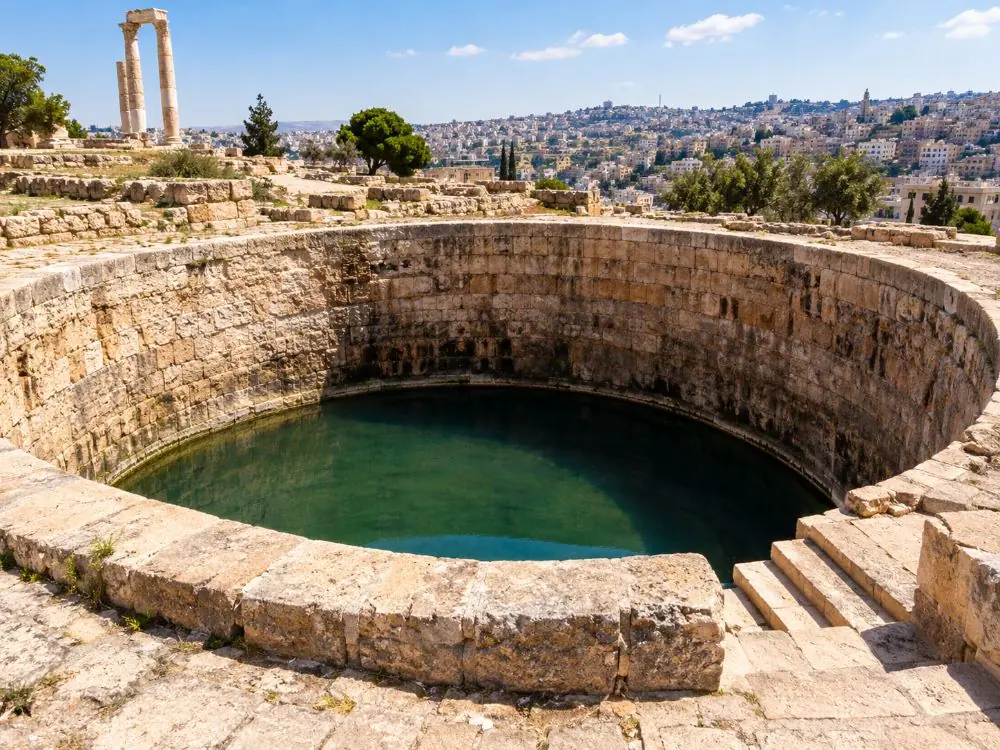
The cistern lies east of the entrance hall. It is a perfect circle 17.5 m wide and about 5 m deep, with steps down to the floor and a stone in the centre that held a measuring pillar for the water level. Channels from the roofs and paving fed it, and it supplied the palace baths and latrines. A small bathhouse sits alongside.
To finish, leave by the steps on the east side of the hill. Lonely Planet recommends this route: it passes a viewing platform and drops down to Hashemi Street, opposite the Roman Theatre. Our getting-there guide has the details.
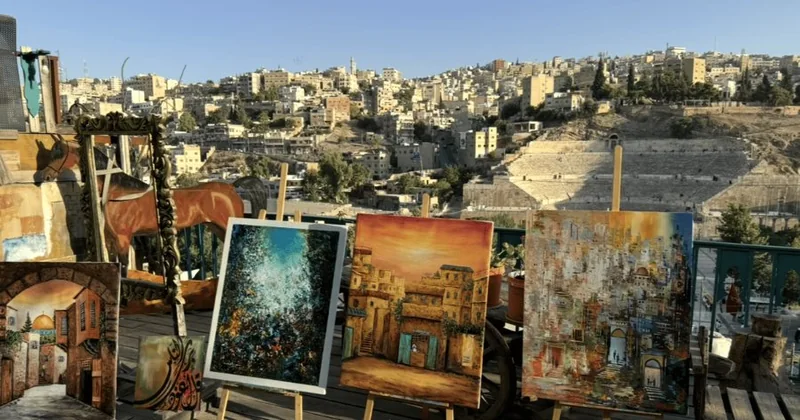
Walk the hill with a guide, then drop down to the Roman Theatre and the souks on foot.
Explore the Citadel and art trail walk Tour detailsFrequently asked questions
Can you go inside the Umayyad palace at the Amman Citadel?
Yes. The domed entrance hall is open to visitors, and you can walk the colonnaded street and the governor's quarters beyond it. Some areas are roped off for excavation.
Is the hand of Hercules real?
Yes. The marble hand and elbow were found near the temple and belong to a Roman statue estimated at about 13 m tall. Its identification as Hercules is a scholarly attribution, not a certainty.
Are there toilets at the Amman Citadel?
The visitors' centre the municipality opened by the entrance in 2009 includes restrooms. There is little else on the hilltop, so bring water.
Is the Citadel worth it if I have seen Jerash?
Yes, for different reasons. Jerash is a Roman city; the Citadel's best monument is the Umayyad palace, and the view over downtown Amman is the best in the city.
Ready to book
Choose your tour
Free cancellation up to 24 hours before on every option. Prices are from-prices in USD and move with the season.
Amman Citadel Guided Walking Tour
- A local guide for 90 minutes on the Citadel
- Temple of Hercules, Umayyad Palace and fortifications
- Guided in English or Arabic
Walking Tour: Citadel, Art Trail & Souks
A guided hour on the hill, then galleries and the souks on foot
Amman Tour: Citadel, Theatre & Jordan Museum
Four hours with the Jordan Museum on the route